

Understanding a baby sleep schedule can feel overwhelming, especially for new parents navigating sleepless nights and unpredictable nap times. The good news is that sleep patterns become more predictable as babies grow. By learning age-appropriate sleep needs, wake windows, and nap schedules, you can help your little one get the rest they need for healthy growth and development.
Sleep is more than just rest—it plays a vital role in brain development, physical growth, memory formation, and emotional regulation. This guide will walk you through the ideal baby sleep schedule from birth to 12 months, helping you understand what is normal and when to seek guidance. While establishing a baby sleep schedule, parents should also ensure their child receives timely vaccinations by following our Baby Vaccination Schedule in India (2026) guide. Following a consistent baby sleep schedule helps babies feel secure, improves sleep quality, and makes daily routines easier for parents.
Why a Healthy Baby Sleep Schedule Is Important in the First Year
Babies spend a significant portion of their first year sleeping, and for good reason. During sleep, the brain processes new information, strengthens neural connections, and releases growth hormones.

According to the World Health Organization (WHO), adequate sleep is essential for healthy physical and cognitive development in infants and young children. Research also shows that newborns typically require between 14 and 17 hours of sleep per day, while older infants need approximately 12 to 15 hours.
Benefits of healthy sleep include:
- Better brain development
- Stronger immune function
- Improved mood and behavior
- Enhanced learning and memory
- Healthy physical growth
A consistent sleep routine can also improve parental well-being by reducing bedtime struggles and nighttime awakenings.
Understanding Wake Windows and Sleep Cues
One of the biggest mistakes parents make is focusing only on sleep times rather than Wake Windows.
Wake windows refer to the amount of time a baby can comfortably stay awake between sleep periods. If a baby stays awake too long, they may become overtired, making it harder to fall asleep.
Common sleep cues include:
- Yawning
- Eye rubbing
- Fussiness
- Looking away from stimulation
- Reduced activity
Following wake windows instead of strict clock schedules often leads to better sleep outcomes during infancy.
Baby Sleep Schedule by Age: 0–12 Months (Quick Reference Table)
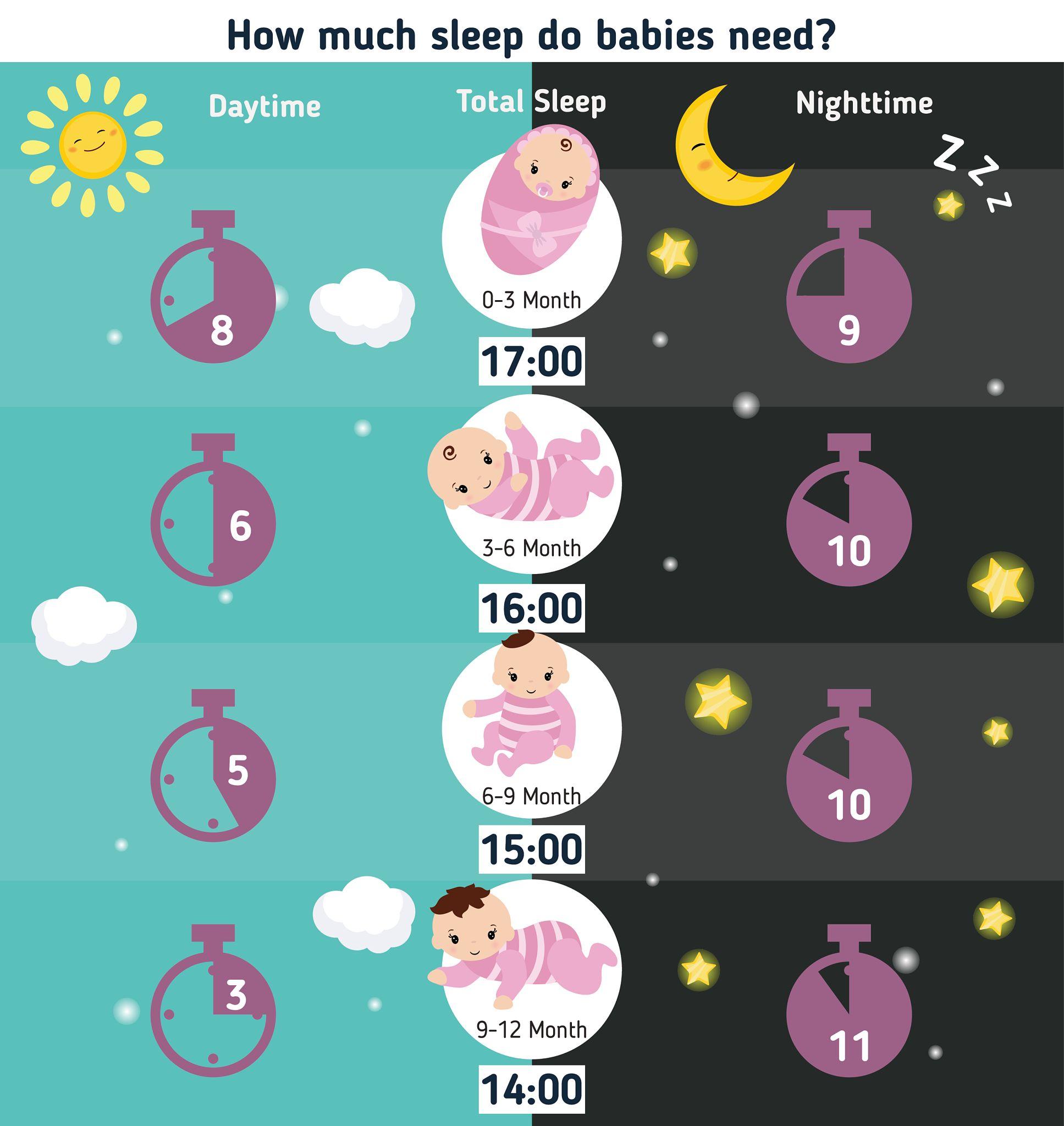
| Age | Total Sleep | Daytime Naps | Night Sleep Duration | Wake Windows |
| 0–3 Months | 14–17 Hours | 4–6 Naps | 8–9 Hours | 45–90 Minutes |
| 3–6 Months | 12–16 Hours | 3–4 Naps | 9–10 Hours | 1.5–2.5 Hours |
| 6–9 Months | 12–15 Hours | 2–3 Naps | 10–11 Hours | 2–3 Hours |
| 9–12 Months | 12–14 Hours | 2 Naps | 10–12 Hours | 3–4 Hours |
Remember that every baby is unique. These figures serve as general guidelines rather than strict rules.
Newborn Sleep Schedule (0–3 Months)
Understanding Newborn Sleep Patterns
During the first three months, babies have not yet developed a mature day-night rhythm. Their sleep is largely driven by feeding needs.
Newborn Sleep Patterns are characterized by:
- Frequent waking every 2–4 hours
- Short sleep cycles
- Day-night confusion
- Irregular sleep timing
A typical newborn sleeps between 14 and 17 hours in a 24-hour period.
Parents should focus on:
- Feeding on demand
- Responding to sleep cues
- Creating a calm sleep environment
- Avoiding overstimulation
At this stage, a rigid schedule is neither necessary nor realistic.
Baby Sleep Schedule (3–6 Months)
Development of Circadian Rhythm
Between three and six months, many babies begin developing a more predictable sleep routine as their Circadian Rhythm matures.
Circadian rhythm is the body’s internal clock that helps regulate sleep and wake cycles.
During this period:
- Nighttime sleep becomes longer
- Daytime naps become more structured
- Some babies sleep 6–8 hour stretches at night
- Wake windows increase to 1.5–2.5 hours
This is often the ideal time to introduce consistent bedtime routines such as:
- Warm bath
- Feeding
- Storytime
- Soft lullabies
A predictable bedtime routine can signal to your baby that it is time to sleep. At this age, many families begin establishing a predictable baby sleep schedule that includes regular naps and bedtime routines.
Baby Sleep Schedule (6–9 Months)
By six months, many babies are capable of sleeping for longer periods overnight.
Typical sleep characteristics include:
- 12–15 total hours of sleep
- 2–3 daytime naps
- 10–11 hours of consolidated nighttime sleep
Many babies begin sleeping through the night, although occasional waking remains normal.
Parents may also notice:
- Increased mobility
- Separation anxiety
- Teething discomfort
These developmental milestones can temporarily affect sleep quality.
Consistency remains the key to maintaining healthy sleep habits. Maintaining a consistent baby sleep schedule can help reduce bedtime resistance and improve overnight sleep.
Baby Sleep Schedule (9–12 Months)
Nap Transition and Increasing Independence
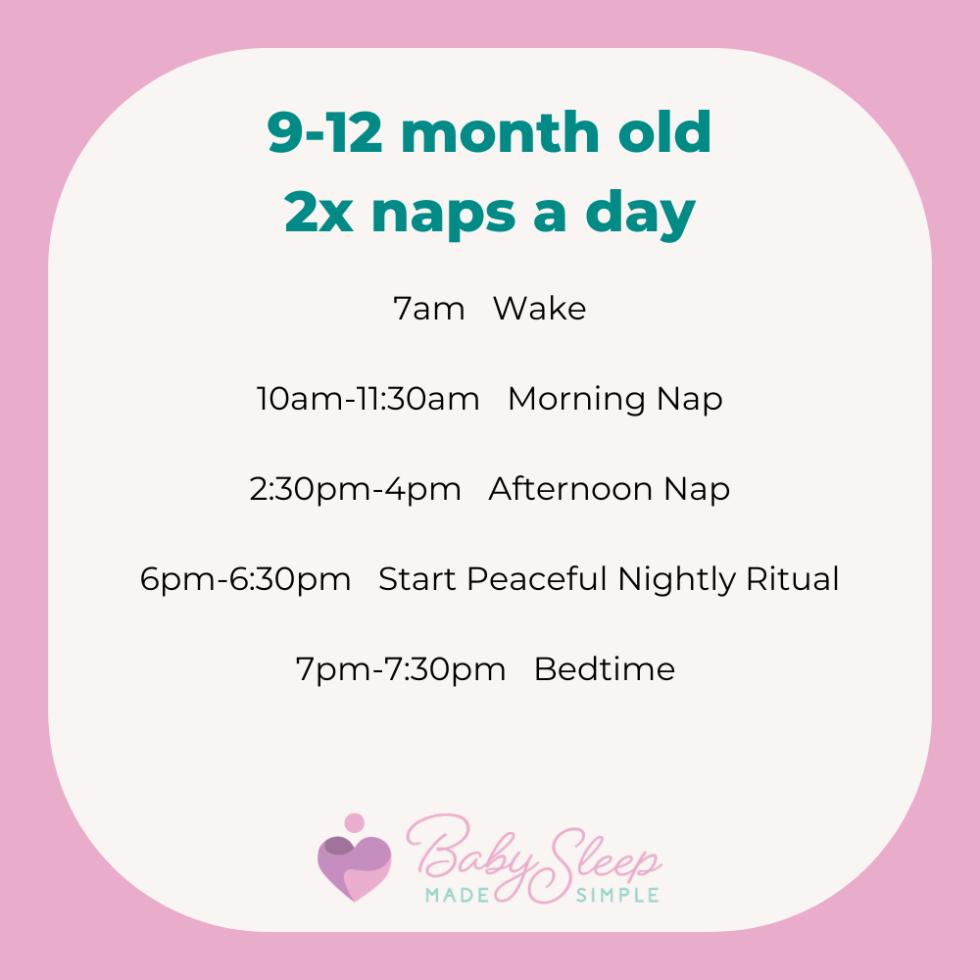
Between nine and twelve months, babies generally transition toward a two-nap schedule.
Typical patterns include:
- Morning nap
- Afternoon nap
- 10–12 hours of nighttime sleep
Wake windows extend to approximately 3–4 hours.
During this phase, babies become more active and curious, which can sometimes lead to bedtime resistance.
Helpful strategies include:
- Maintaining a consistent bedtime
- Avoiding excessive screen exposure
- Encouraging active daytime play
- Following predictable nap routines
Most babies continue thriving on two naps until approximately 15–18 months. A structured baby sleep schedule becomes even more important as babies become increasingly active and curious.
Common Baby Sleep Challenges and Sleep Regressions
One of the most searched parenting concerns is Sleep Regression.
Sleep regression refers to temporary periods when a baby who previously slept well suddenly begins waking frequently or resisting sleep.
Common regressions occur around:
- 4 Months
- 8–10 Months
- 12 Months
Causes include:
- Developmental leaps
- Teething
- Illness
- Separation anxiety
- Changes in routine
Although frustrating, regressions are usually temporary and often resolve within a few weeks.
To manage regressions:
- Maintain bedtime consistency
- Avoid introducing unsustainable sleep habits
- Provide comfort without creating new sleep dependencies
Patience and routine are often the best solutions. Sleep regressions can temporarily disrupt an otherwise well-established baby sleep schedule.
Safe Sleep Tips for Indian Parents
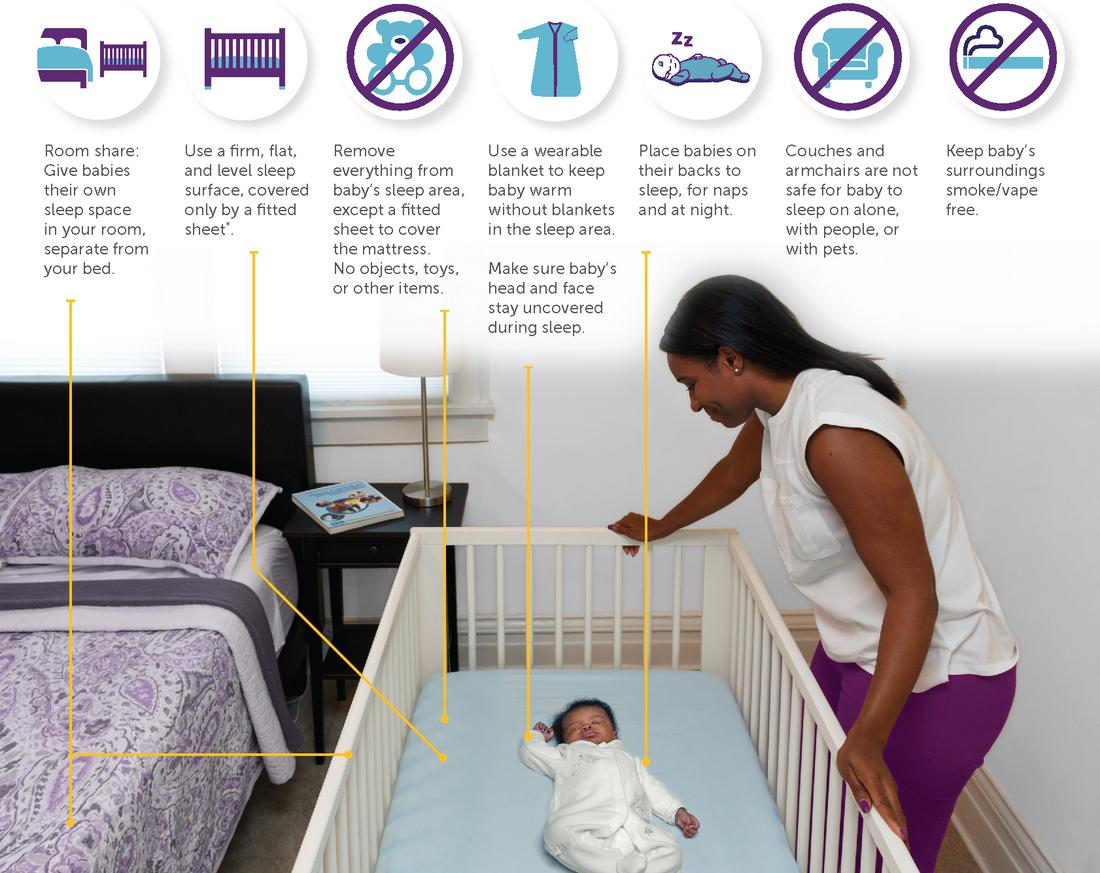
Following Safe Sleep Guidelines significantly reduces the risk of sleep-related accidents.
The American Academy of Pediatrics (AAP) recommends the following safe sleep practices for infants:
Always Place Babies on Their Back
Back sleeping is the safest sleep position during the first year.
Use a Firm Sleep Surface
A firm mattress with a fitted sheet is ideal.
Keep the Sleep Area Clear
Avoid:
- Pillows
- Loose blankets
- Soft toys
- Cushions
Avoid Bed Sharing
Room sharing without bed sharing is generally considered safer for infants.
Maintain a Comfortable Room Temperature
Overheating can increase sleep risks and discomfort.
These evidence-based practices help create a safe sleep environment for babies.
Parents looking for additional sleep guidance can also refer to the recommendations published by the National Sleep Foundation, which provides age-specific sleep duration recommendations for infants and young children. Combining safe sleep practices with a consistent baby sleep schedule supports healthy infant development.
Frequently Asked Questions
What is the 3-3-3 rule for baby sleep?
The 3-3-3 approach typically refers to age-specific wake windows and nap structures used by some sleep consultants. It is not an official medical guideline but may help establish routines.
At what age should a baby have a sleep schedule?
Most babies begin developing a more predictable schedule between 3 and 6 months of age.
How many naps does a 6-month-old need?
Most 6-month-olds take 2–3 naps daily.
Is it normal for babies to wake at night?
Yes. Night waking is common throughout the first year, particularly during growth spurts, illness, or sleep regressions.
When do babies start sleeping through the night?
Many babies begin sleeping longer stretches around 6 months, but sleep patterns vary widely.
How do I create a baby sleep schedule?
The best baby sleep schedule is based on your baby’s age, wake windows, feeding needs, and sleep cues rather than strict clock times.
Final Thoughts
Building a healthy baby sleep schedule is a gradual process that evolves throughout your child’s first year. By understanding wake windows, recognizing sleep cues, following age-appropriate nap schedules, and implementing safe sleep practices, parents can create a foundation for healthy lifelong sleep habits. Remember that every child develops differently, so flexibility and consistency are equally important. With patience and realistic expectations, you can confidently support your baby’s changing sleep needs while establishing a sustainable baby sleep schedule that benefits the entire family.