

Watching your baby’s growth during the first year is one of the most exciting parts of parenting. Understanding baby milestones by month helps parents track developmental progress, celebrate achievements, and identify potential concerns early. From the first smile to the first step, babies develop rapidly across motor, communication, cognitive, and social skills.
According to the CDC’s Learn the Signs. Act Early. program, developmental milestones are skills that most children (75% or more) achieve by a certain age. While every infant develops at their own pace, milestone tracking provides valuable guidance for parents and healthcare professionals. Understanding baby milestones by month helps parents track developmental progress, celebrate achievements, and identify potential concerns early. Along with tracking milestones, parents should also understand proper newborn feeding schedules to support healthy growth.
What Are Baby Milestones and Why Do They Matter?

Developmental milestones are age-specific skills that infants typically achieve as they grow. These milestones generally fall into four categories:
- Motor skills and movement
- Communication and language
- Social and emotional development
- Cognitive development
During the first year, babies undergo remarkable changes. They progress from limited movement and reflexes to standing, walking, and saying simple words.
Monitoring milestones helps parents:
- Understand healthy infant development
- Support learning through age-appropriate activities
- Detect developmental delays early
- Discuss concerns with healthcare providers
The CDC, HealthyChildren.org (AAP), and Cleveland Clinic all recommend regularly tracking developmental milestones throughout the first year.
Parents can also explore developmental resources from Johns Hopkins Medicine.
The following baby milestones by month guide explains what parents can typically expect during the first year.
0–3 Months: Head Control & Early Interaction
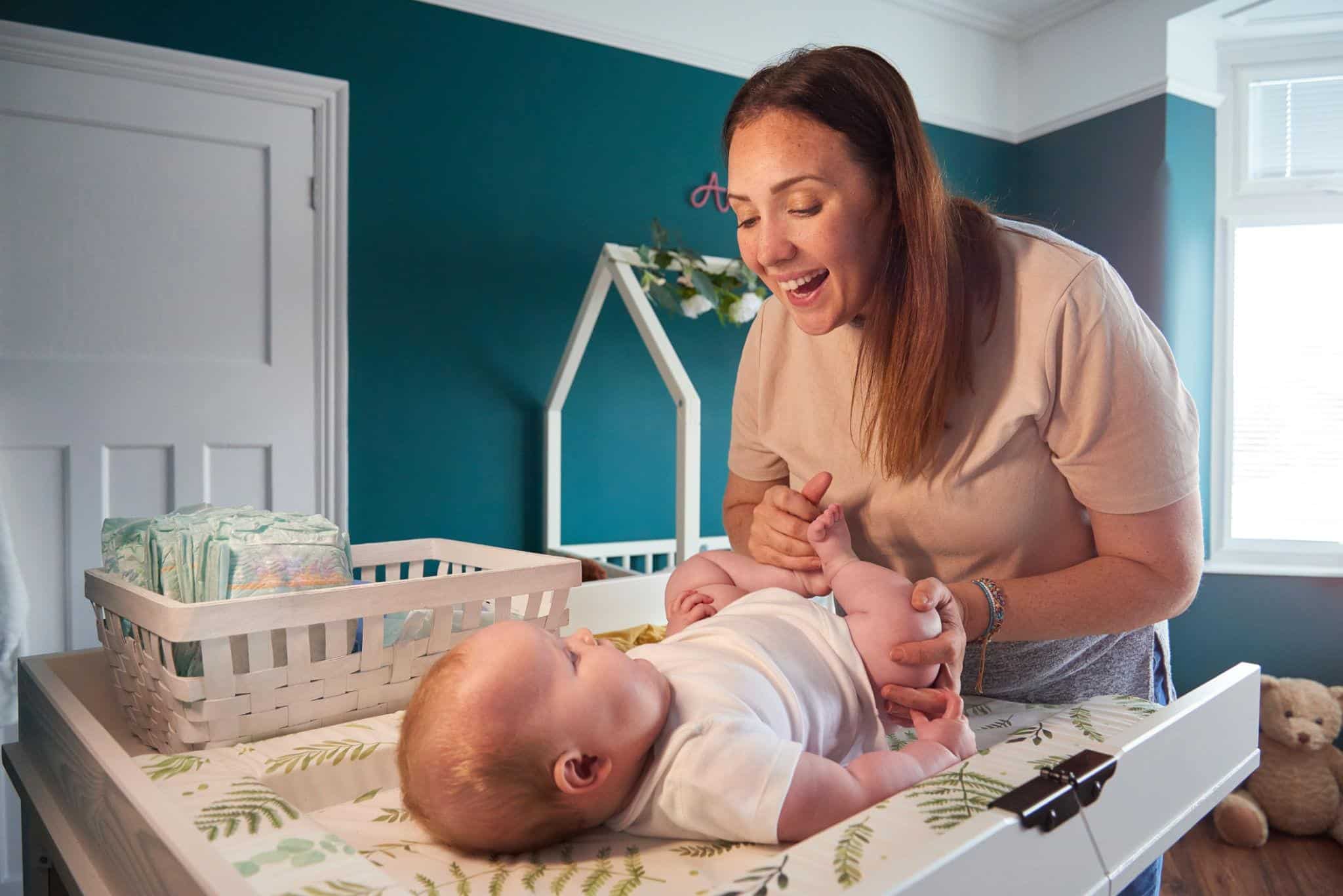
The first three months focus on building strength, awareness, and social connections. Babies begin responding to voices, faces, and environmental stimuli while developing essential neck and upper-body muscles.
Movement & Physical Milestones at 0–3 Months
During this stage, infants gradually gain better control over their bodies.
Common motor milestones include:
- Lifting the head during tummy time
- Moving both arms and legs actively
- Opening and closing hands
- Following objects with their eyes
- Improved neck strength and head control
The CDC notes that by around 2 months, most babies can hold their head up briefly while lying on their tummy and move both arms and legs actively. This is why pediatricians often encourage supervised tummy time from the earliest weeks.
Communication & Social Milestones at 0–3 Months
Social and communication skills emerge surprisingly early.
Babies may:
- Look at caregivers’ faces
- Smile socially
- Respond to familiar voices
- Make cooing sounds
- Calm when spoken to or comforted
By 2 months, many infants begin smiling when parents smile or talk to them. These early interactions help build emotional security and support future language development. Adequate sleep plays a major role in early development. Follow an age-appropriate baby sleep schedule to support healthy growth.
4–6 Months: Rolling, Reaching & First Sounds
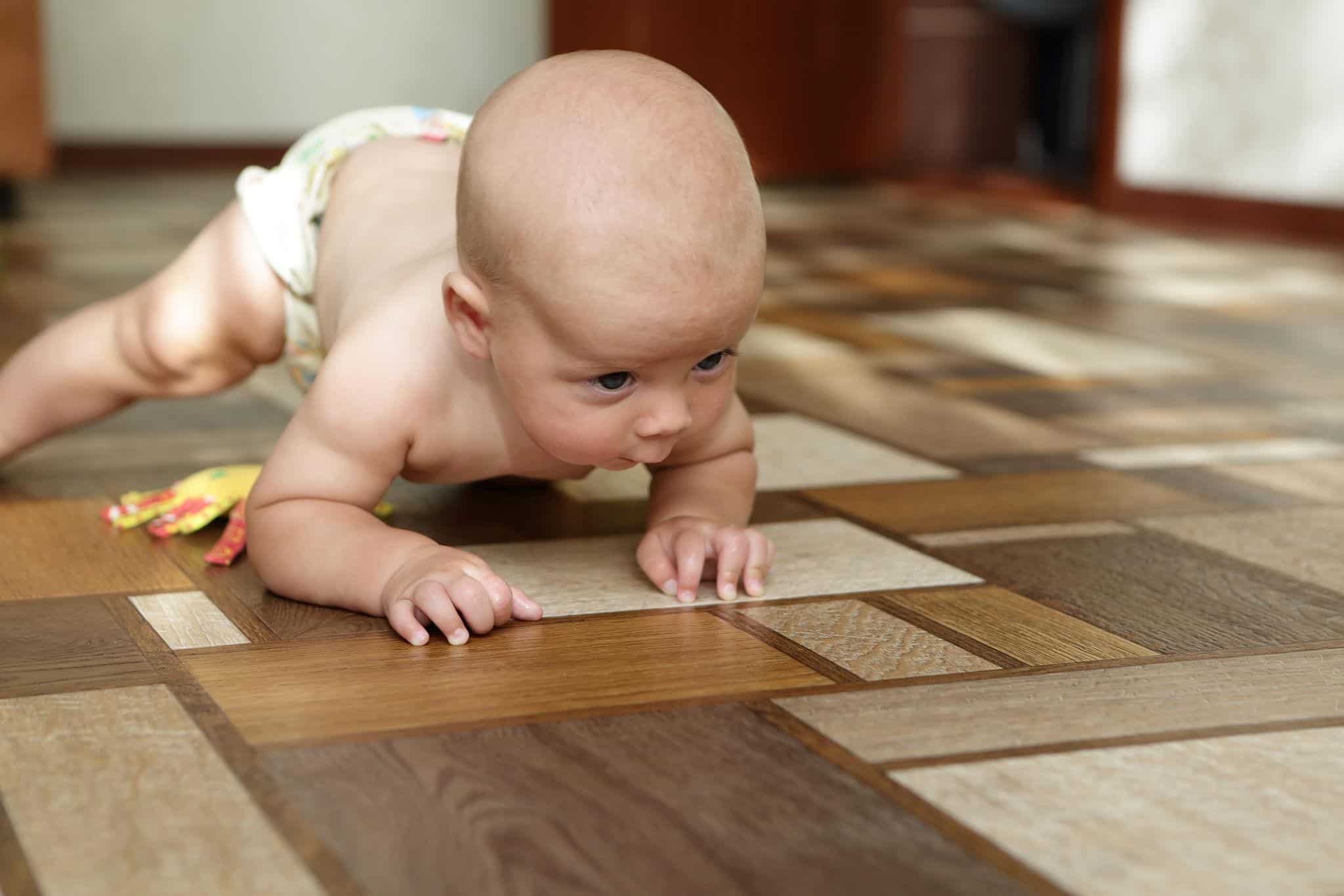
Between four and six months, babies become much more active and curious about their surroundings.
Key milestones include:
- Rolling from tummy to back
- Reaching for toys
- Grasping objects intentionally
- Bringing objects to the mouth
- Laughing and squealing
- Responding to their name
Motor skills improve dramatically during this period. Many babies begin rolling over around four months and can sit with support by six months.
Communication also expands rapidly. Babies experiment with sounds and start vocalizing more frequently. Parents often hear repetitive sounds such as:
- “ba”
- “ma”
- “da”
Although these sounds are not yet true words, they represent important language-building practice. When reviewing baby milestones by month, the 4–6 month stage often brings significant improvements in movement and communication. Regular health checkups and following the baby vaccination schedule in India help ensure healthy development.
7–9 Months: Sitting, Crawling & Object Awareness
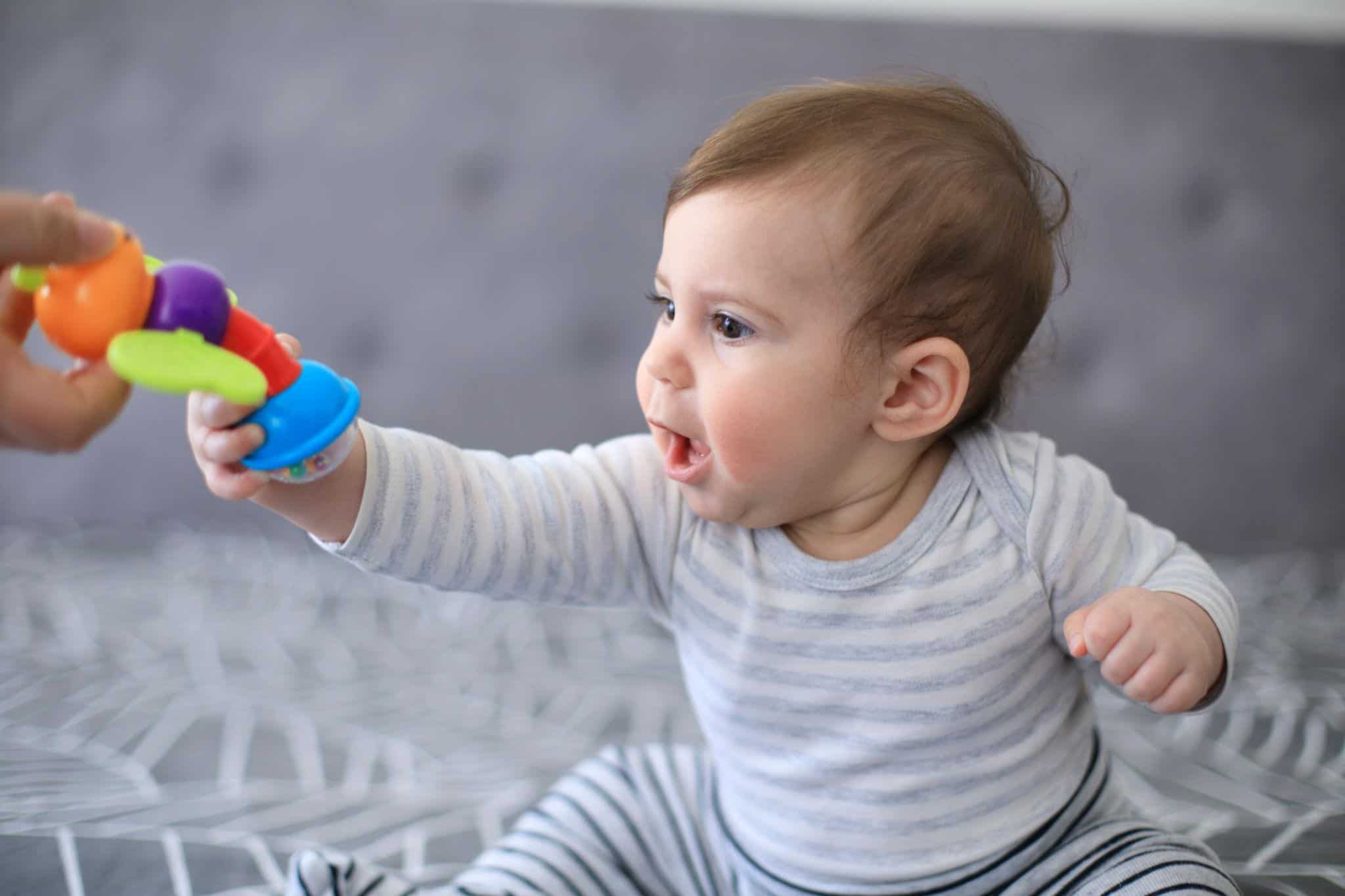
This stage often marks a major leap in independence.
Common developmental milestones include:
- Sitting without support
- Crawling or scooting
- Bearing weight on legs
- Transferring toys between hands
- Recognizing familiar people
- Understanding object permanence
Object permanence is an important cognitive milestone. Babies begin realizing that objects continue to exist even when hidden.
Social awareness also increases significantly. Babies may show stranger anxiety or become strongly attached to primary caregivers.
Fine motor skills improve as well. Many infants start developing the pincer grasp, using the thumb and forefinger to pick up small objects. Many parents consider this one of the most exciting periods in the baby milestones by month journey.
10–12 Months: First Steps & First Words

The final months of the first year are filled with exciting firsts.
Many babies begin:
- Pulling up to stand
- Cruising along furniture
- Taking independent steps
- Pointing at objects
- Waving goodbye
- Saying simple words
According to the CDC, by 12 months many babies can pull to stand, walk while holding furniture, understand “no,” and use words such as “mama” or “dada.”
Language development accelerates during this period. Babies increasingly understand simple instructions and gestures.
Social skills continue growing as babies imitate actions, play interactive games like peek-a-boo, and express preferences more clearly. The final stage of baby milestones by month includes first steps, first words, and increased independence.
When to Talk to Your Doctor About Delayed Milestones
It’s important to remember that developmental milestones represent averages, not strict deadlines. Every child develops at a unique pace.
However, parents should discuss concerns with their pediatrician if a baby:
- Doesn’t respond to sounds
- Shows poor head control after several months
- Doesn’t smile socially
- Cannot sit with support by six months
- Doesn’t babble by nine months
- Shows no interest in interaction
- Loses previously acquired skills
The CDC recommends acting early if a child is missing milestones or loses abilities they once had. Parents should discuss concerns promptly and request developmental screening when needed.
Resources from:
- CDC (Centers for Disease Control)
- HealthyChildren.org (AAP)
- Cleveland Clinic
can help parents better understand developmental expectations. Parents can also review our comprehensive newborn baby care guide for additional developmental support.
Important Statistic
The CDC defines milestones as skills that 75% or more children can achieve by a specific age. This means some healthy babies may reach milestones slightly earlier or later than expected.
Baby Milestones by Month Chart & Tracking Checklist
Tracking milestones helps parents monitor progress without becoming overly anxious. Using a baby milestones by month chart makes it easier to monitor your infant’s development throughout the first year.
Quick First-Year Milestone Chart
| Age | Common Milestones |
| 2 Months | Smiles, coos, lifts head |
| 4 Months | Rolls over, laughs |
| 6 Months | Sits with support, reaches for toys |
| 9 Months | Crawls, sits independently |
| 12 Months | Stands, cruises, says simple words |
Parents can use:
- CDC Milestone Tracker App
- Printable milestone checklists
- Pediatric well-baby visits
- Development journals
Regular monitoring helps identify patterns and supports healthy development throughout the first year.
Recording milestones alongside feeding, sleeping, and hygiene habits can provide a complete picture of your baby’s growth. Learn more about preventing diaper rash in babies.
FAQs: Baby Milestones by Month
What are baby milestones by week?
Most healthcare professionals track developmental milestones by month rather than week because growth varies considerably among infants.
What are common 4-month baby milestones?
Many babies can roll over, laugh, reach for toys, recognize familiar faces, and show improved head control by four months.
What is a 1–12 month baby development chart?
A baby development chart summarizes major motor, communication, cognitive, and social milestones expected during the first year.
Do all babies hit milestones at the same age?
No. Every infant develops differently. Milestones provide guidelines rather than strict deadlines.
Which organizations provide trusted milestone information?
Trusted sources include:
- CDC
- HealthyChildren.org (AAP)
- Cleveland Clinic
- Johns Hopkins Medicine
What is the best baby milestones by month chart?
A baby milestones by month chart provides a month-by-month overview of motor, communication, social, and cognitive development during the first year.
Conclusion
Tracking baby milestones by month provides parents with valuable insight into their child’s physical, social, communication, and cognitive development. While every infant follows a unique developmental path, understanding milestone expectations helps families celebrate progress and identify concerns early. By using trusted resources such as the CDC, HealthyChildren.org (AAP), and Cleveland Clinic, parents can confidently support their baby’s growth throughout the first year.